

Quiet time with horses. Space to notice what happens.
Horses have a remarkable way of bringing us into the present.
They pay attention to movement, space, energy, and body language. They respond to what is happening right now — and interacting with them gives us opportunities to slow down, become more aware, try something different, and experience connection without needing a lot of words.
Horse Connection Sessions are individualized, ground-based experiences designed to create opportunities for connection, confidence, communication, self-awareness, and growth.
No riding. No horse experience needed. No pressure to accomplish anything in particular.
Just a person, a horse, some thoughtful guidance, and room to see what unfolds.
What it is
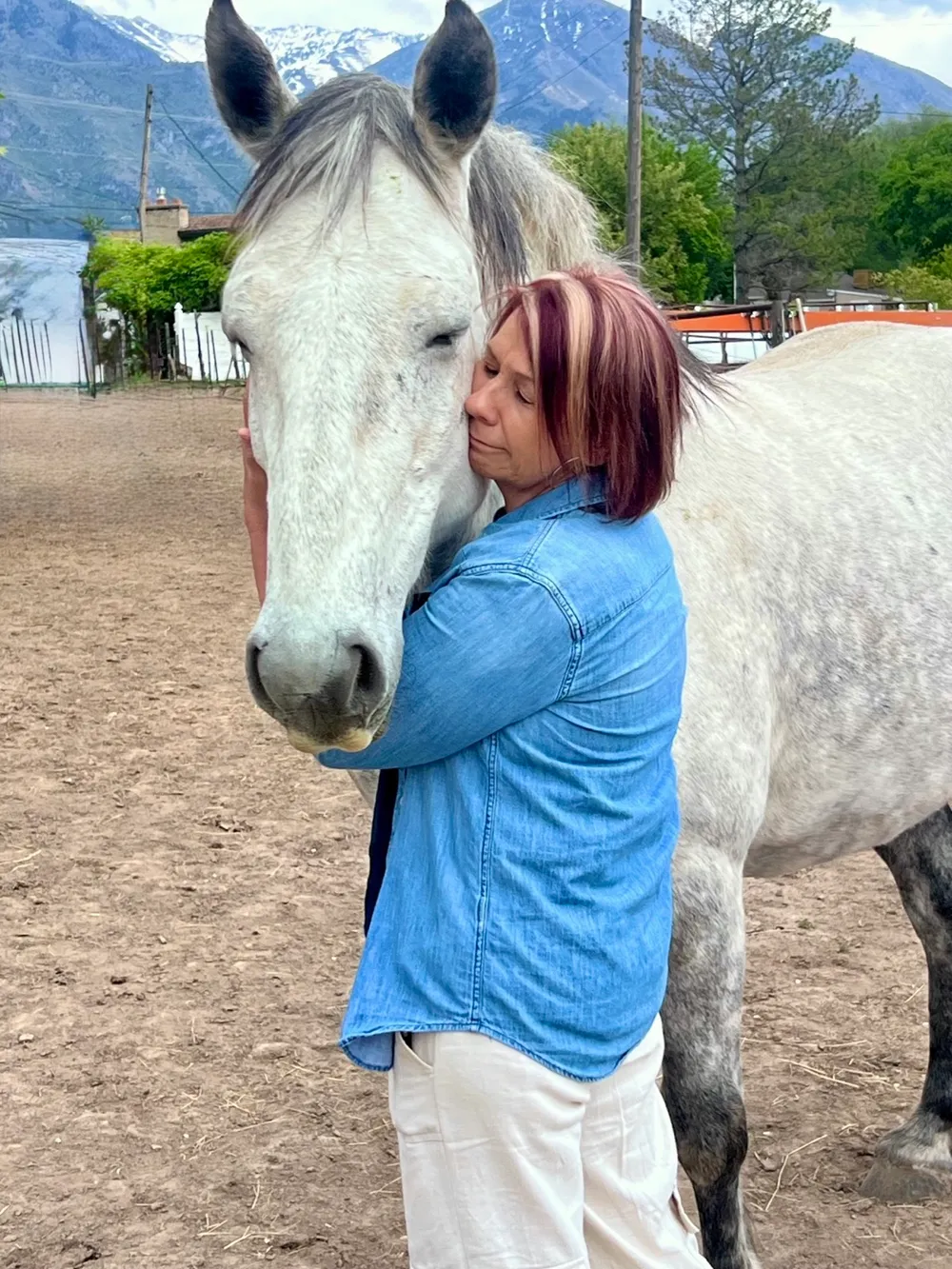
Horse Connection Sessions take place on the ground, alongside the horses.
Depending on the person, the horse, and the goals for the session, we might spend time observing horses in the pasture, grooming, leading, navigating a simple activity together, practicing communication and boundaries, or simply learning how to comfortably share space with a very large animal.
The activity itself isn’t necessarily the important part. What becomes interesting is what we notice along the way.
How do I approach something unfamiliar? What happens when the horse doesn’t immediately understand what I’m asking? Can I communicate more clearly? Can I adjust without becoming frustrated? Can I notice what the horse is communicating back to me? Can I respect the horse’s boundaries while maintaining my own?
Sometimes the most meaningful part of a session may be accomplishing something together. Sometimes it may simply be standing quietly beside a horse.
Both count.
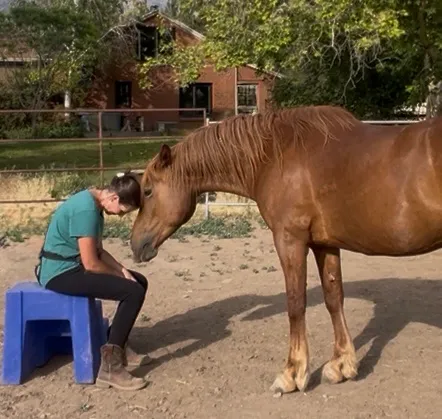
Horse Connection Sessions are experiential and educational in nature. They are not psychotherapy, mental health treatment, or therapeutic riding.
Why horses?
Horses communicate constantly, but much of their communication happens without words.
They notice movement, posture, proximity, pressure, and changes in the environment around them. Learning to interact with a horse often asks us to become more observant — of the horse and of ourselves.
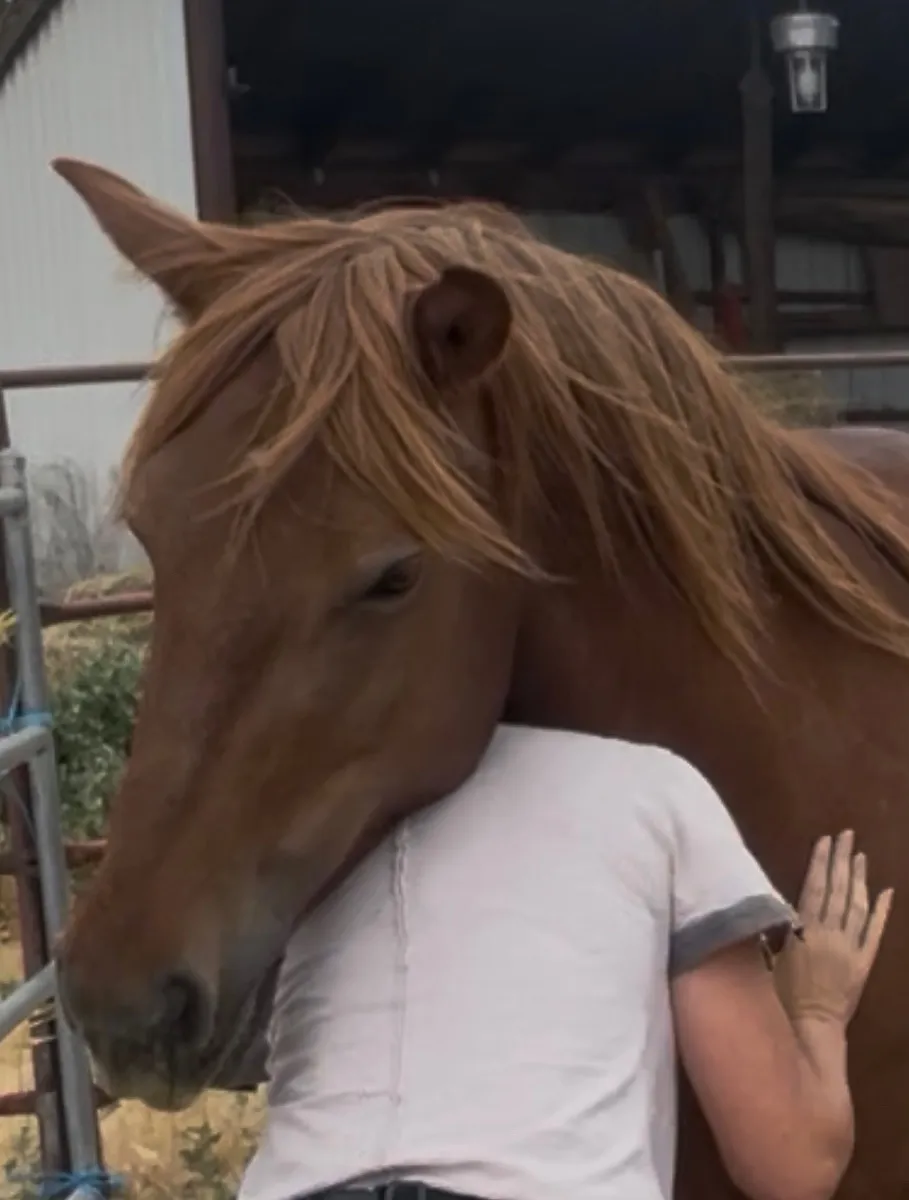
And because horses have their own preferences, personalities, and boundaries, connection with them can’t simply be demanded. It develops through communication, consistency, curiosity, and trust.
Those are useful things to practice.
The goal isn’t for a horse to “fix” anything. The horse simply gives us another relationship in which to notice, experiment, communicate, problem-solve, and connect.
Who it’s for
Horse Connection Sessions can be adapted for a wide range of people, including individuals with disabilities, children and adolescents, adults, siblings, families, and people who simply feel drawn to the experience of connecting with horses.
A session might be especially meaningful for someone who:
- Connects more easily through activity than conversation
- Loves animals or is curious about horses
- Wants to build confidence around something new
- Is working on communication, boundaries, or self-awareness
- Benefits from slower-paced, low-pressure experiences
- Enjoys learning through doing rather than talking
- Could use an opportunity to practice problem-solving and flexibility in a different environment
- Simply wants meaningful, supported time with a horse
You do not need a diagnosis, DSPD services, or previous experience with horses to participate.
Activities can be adapted around many sensory, communication, and support needs. If you’re unsure whether the environment would be appropriate or accessible for you or your loved one, reach out and we’ll talk about it.
What to expect
-
Tell me about you
Before we schedule a session, I’ll ask a little about the person participating — their interests, experience with animals, communication style, support needs, mobility or sensory considerations, and anything else that would help me make the experience comfortable and safe.
-
Meet the herd
There’s no expectation that someone walk in and immediately interact with a horse.
We can start by seeing the space, watching the horses, learning a little about how they communicate, and deciding what feels comfortable.
Some people may be ready to walk right up and meet everyone. Others may want to watch from a distance first. Both are completely fine.
-
Explore
From there, we’ll let the session take shape around the person, the horse, and what we’re hoping to explore.
That might mean grooming, leading, observing, completing a simple activity together, practicing communication, or spending quiet time nearby.
There is no riding, and there is no performance standard.
-
Notice
We’ll pay attention to what happens.
What felt easy? What was challenging? What changed when we tried something differently? What did the horse communicate? What did we notice about ourselves?
The goal isn’t to manufacture a profound moment. Sometimes the lesson is subtle. Sometimes it’s surprising.
And sometimes it’s simply, I did something with a horse today that I didn’t think I could do.
That’s worthwhile too.
Common questions
Is this therapy?
No.
Horse Connection Sessions are experiential and educational. They are not psychotherapy, mental health treatment, occupational or physical therapy, or therapeutic riding.
I bring my professional background in behavior, education, disability support, and horsemanship to the experience, but these sessions are not a substitute for treatment from a licensed healthcare or mental health professional.
Do we ride the horses?
No. Horse Connection Sessions are entirely ground-based.
There is an enormous amount we can learn and experience with horses without ever getting on their backs.
Do I need experience with horses?
Not at all.
In fact, learning how to approach, observe, and communicate with a horse can be part of the experience.
Is it safe?
Working around horses always involves some inherent risk. Horses are large animals with minds and reactions of their own, so no horse activity can be described as completely risk-free.
Safety is a priority in every session. Activities are selected based on the individual, the horse, the environment, and what can reasonably be done safely that day.
Participants will receive guidance about how to move around and interact with the horses, and an activity may be changed or stopped whenever safety requires it.
What should we wear?
Wear comfortable clothing that can get a little dusty, hairy, or dirty.
Closed-toe, sturdy shoes are required around the horses. Clothing appropriate for the weather is also important, since sessions take place outdoors or in an arena environment.
I’ll provide any additional information you need before your visit.
What if someone is nervous around horses?
That’s okay.
Being comfortable around horses isn’t a prerequisite. No one will be pressured into touching, approaching, or interacting with a horse before they’re ready.
Watching from a comfortable distance can be participation too.
Can family members or support staff attend?
Absolutely, when their presence would be helpful.
We’ll talk beforehand about who should participate and what will make the experience most comfortable and meaningful for the person attending.
Let’s start a conversation.
Curious about what time with the horses might look like for you or someone you love?
Send me a note. I’ll reach out personally, usually within two business days.